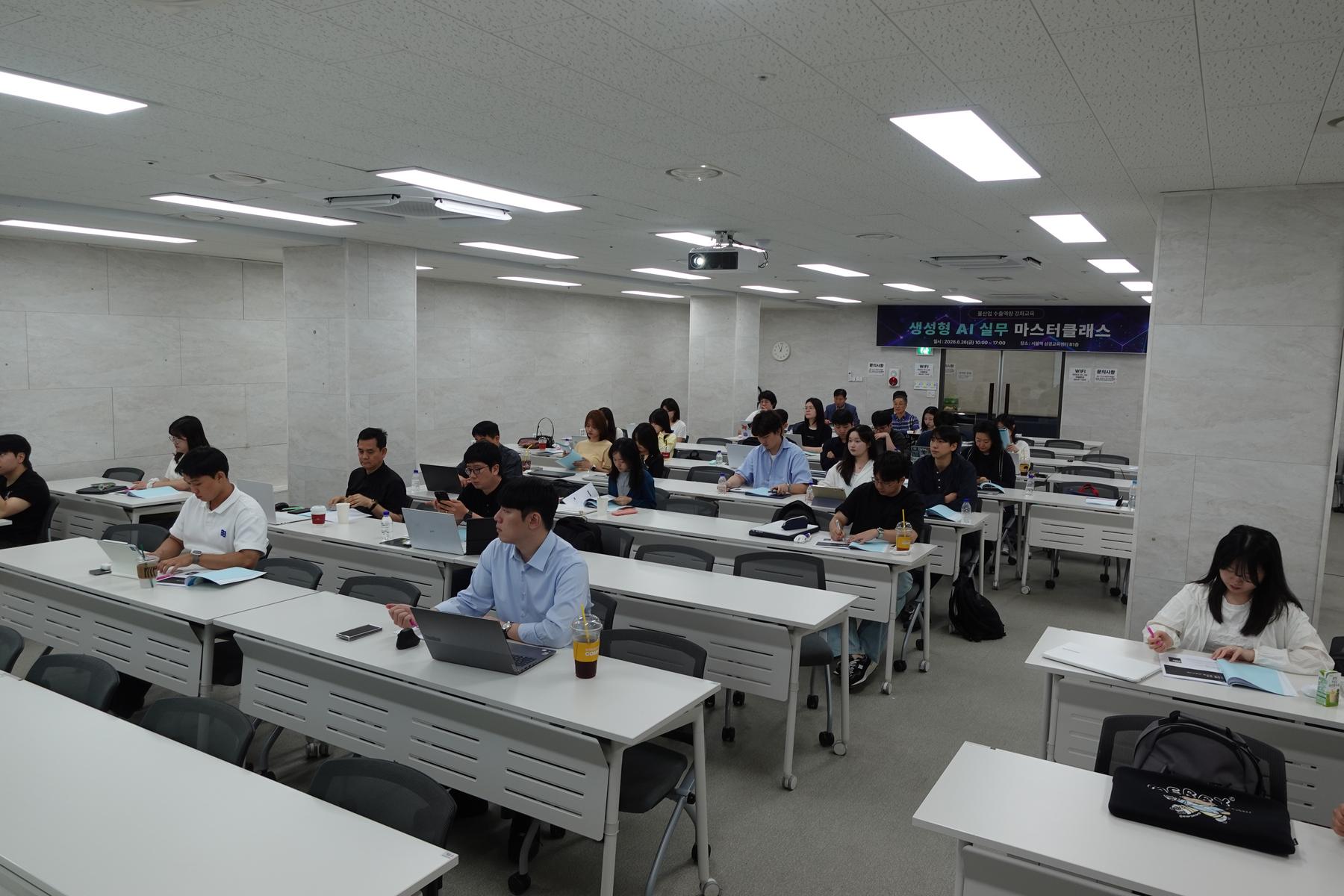
On the morning of Friday, June 26, 2026, laptops opened one by one at the Samkyung Training Center near Seoul Station.
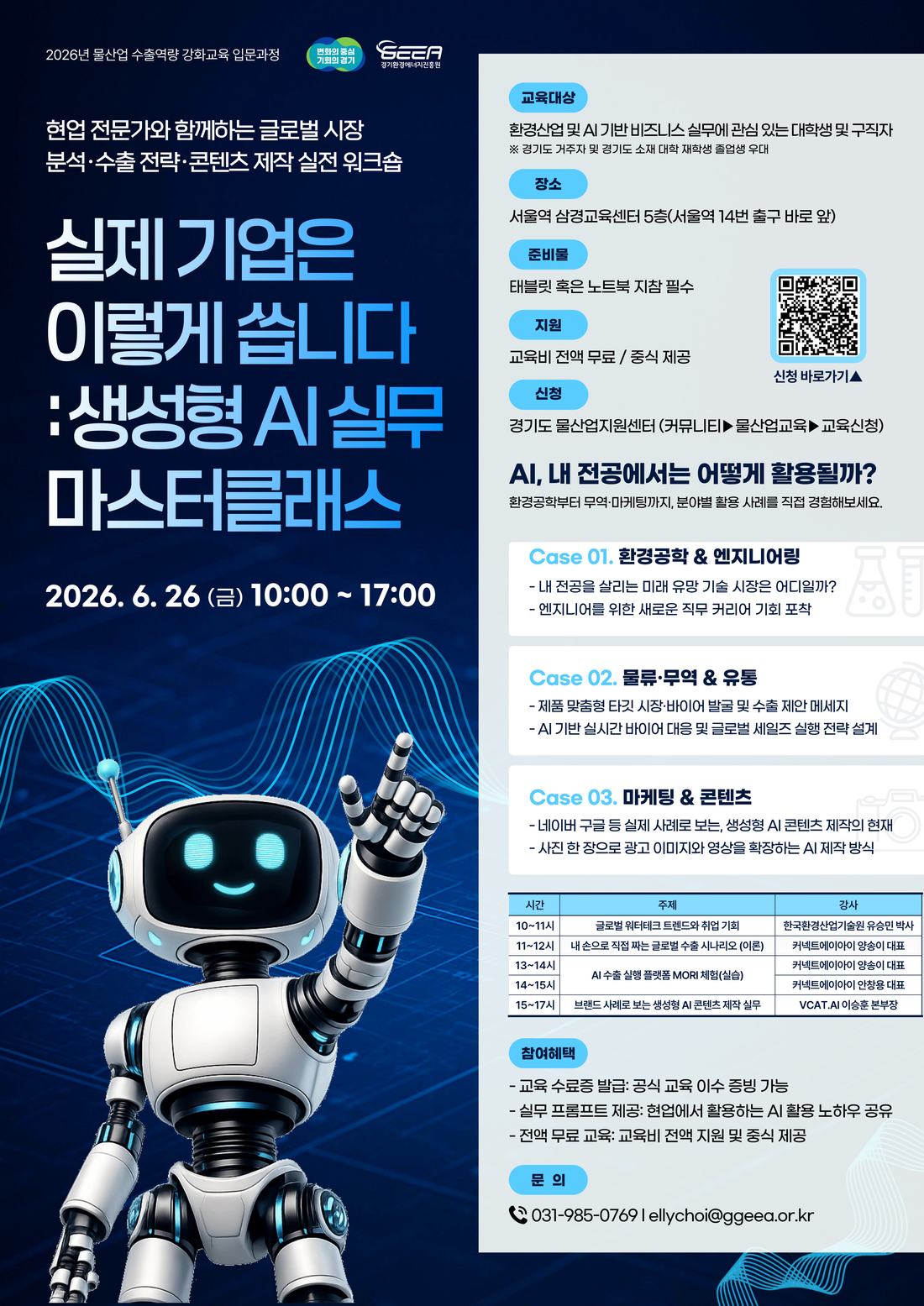
“2026 Water Industry Export Capability Program — Introductory Course” — a one-day course for jobseekers and students preparing for their first role in the water industry.
The subtitle printed on the announcement was the promise of the day: “This is how real companies use it — a generative AI masterclass.”
- Date
- Friday, June 26, 2026 · 10:00–17:00
- Venue
- Samkyung Training Center, Seoul Station
- Host
- Gyeonggi Province
- Organizer
- Gyeonggi Environment & Energy Promotion Agency (GGEEA)
- Operations & curriculum advisory
- KOTRA Academy — the training arm of KOTRA, Korea’s national export support agency
- Participants
- Jobseekers and students entering the water industry (free of charge, lunch provided)
- Delivered by
- CONNECT AI — 1 hour of theory, 2 hours of hands-on practice
Trade then, trade now
The day opened with welcoming remarks from a KOTRA Academy representative. Before introducing the curriculum, they briefly walked through how trade had traditionally been done. Then they summed up the present in a single line: trade, too, has entered the age of AI.
The observation that trade has changed came first from the person in the room who had lived through the most of it. And that afternoon, the participants would run that changed trade themselves, on a single laptop.
One day, four sessions
The design was simple: read the market, set a strategy, actually execute, then produce the content that carries the result. Someone who studied environmental engineering or chemistry learns the language of the water-tech market in the morning, and by evening has drafted, with their own hands, a proposal to send to an overseas buyer.
The program was planned by a GGEEA representative, with curriculum advisory from KOTRA Academy. Within it, CONNECT AI led one hour of theory and two hours of hands-on practice.
| Time | Session | Speaker |
|---|---|---|
| 10–11 | Global water-tech trends and career opportunities — market analysis and a hiring-trend roadmap | Korea Environmental Industry & Technology Institute Dr. Seungmin Yoo |
| 11–12 | Writing your own global export scenario (theory) — defining digital trade, global market trends, and an A-to-Z case analysis of digital trade companies | CONNECT AI Songyi Yang, CEO |
| 13–15 | Hands-on with MORI, the AI export-execution platform — product-fit target markets and buyer discovery, export proposal messages, real-time buyer response and global sales execution strategy | CONNECT AI Songyi Yang, CEO · Changyong An, CEO |
| 15–17 | Generative AI content production, seen through brand cases — from a single product photo to ad images and video | VCAT.AI Seunghoon Lee, Head of Division |
This is how real companies use it.— that one line from the announcement set the standard for the day.
Theory — writing your own export scenario
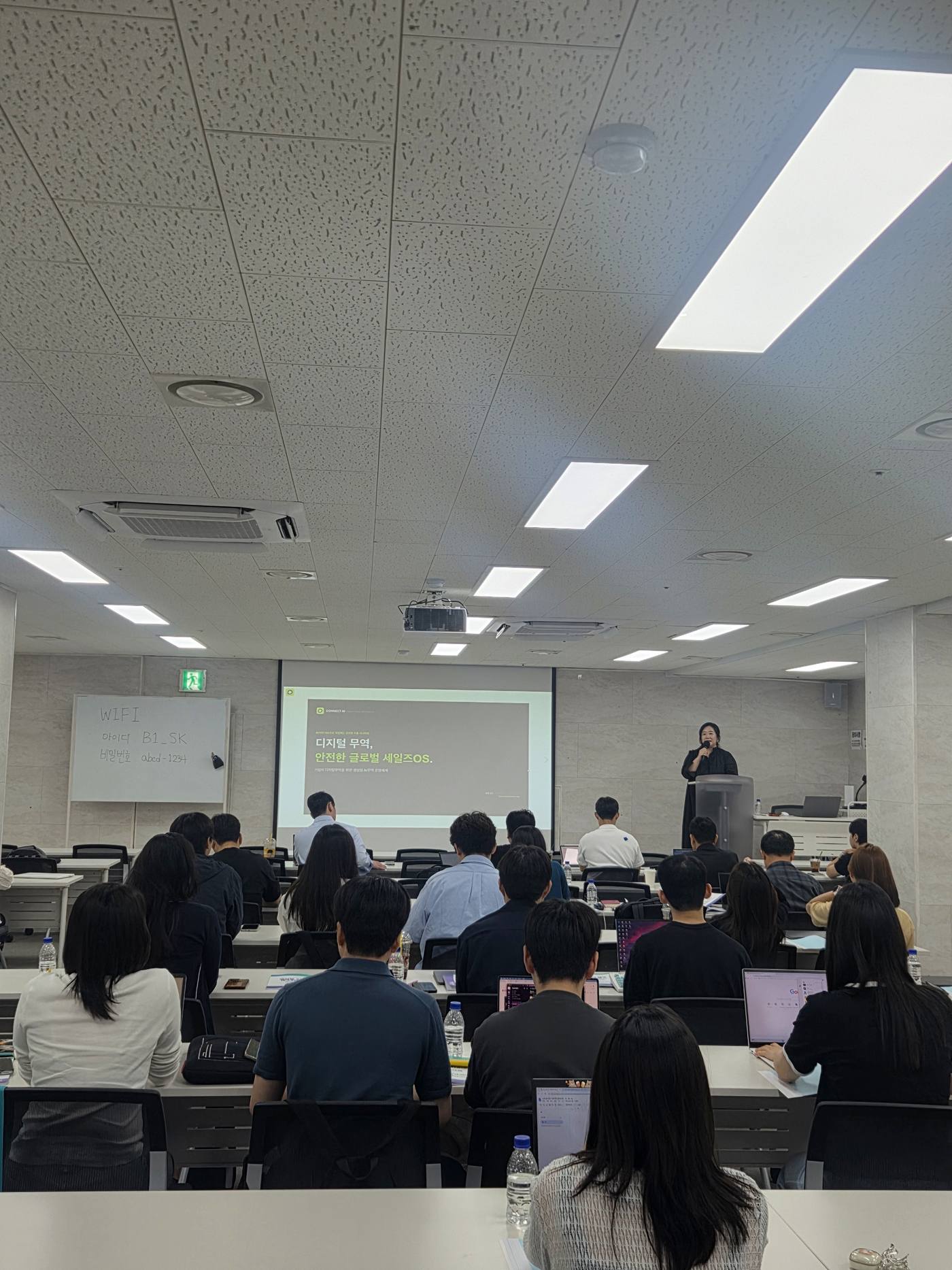
From 11 a.m., for one hour, CONNECT AI CEO Songyi Yang defined digital trade, traced where global markets are heading, and analyzed digital trade companies end to end. Every thread led back to one question: which country, which company, and which desk is the person who will buy our product sitting at? Exporting does not begin with making more — it begins with choosing the right buyer. That was the floor laid in the morning so the afternoon could run on it.
Practice — the whole export journey, running on a laptop
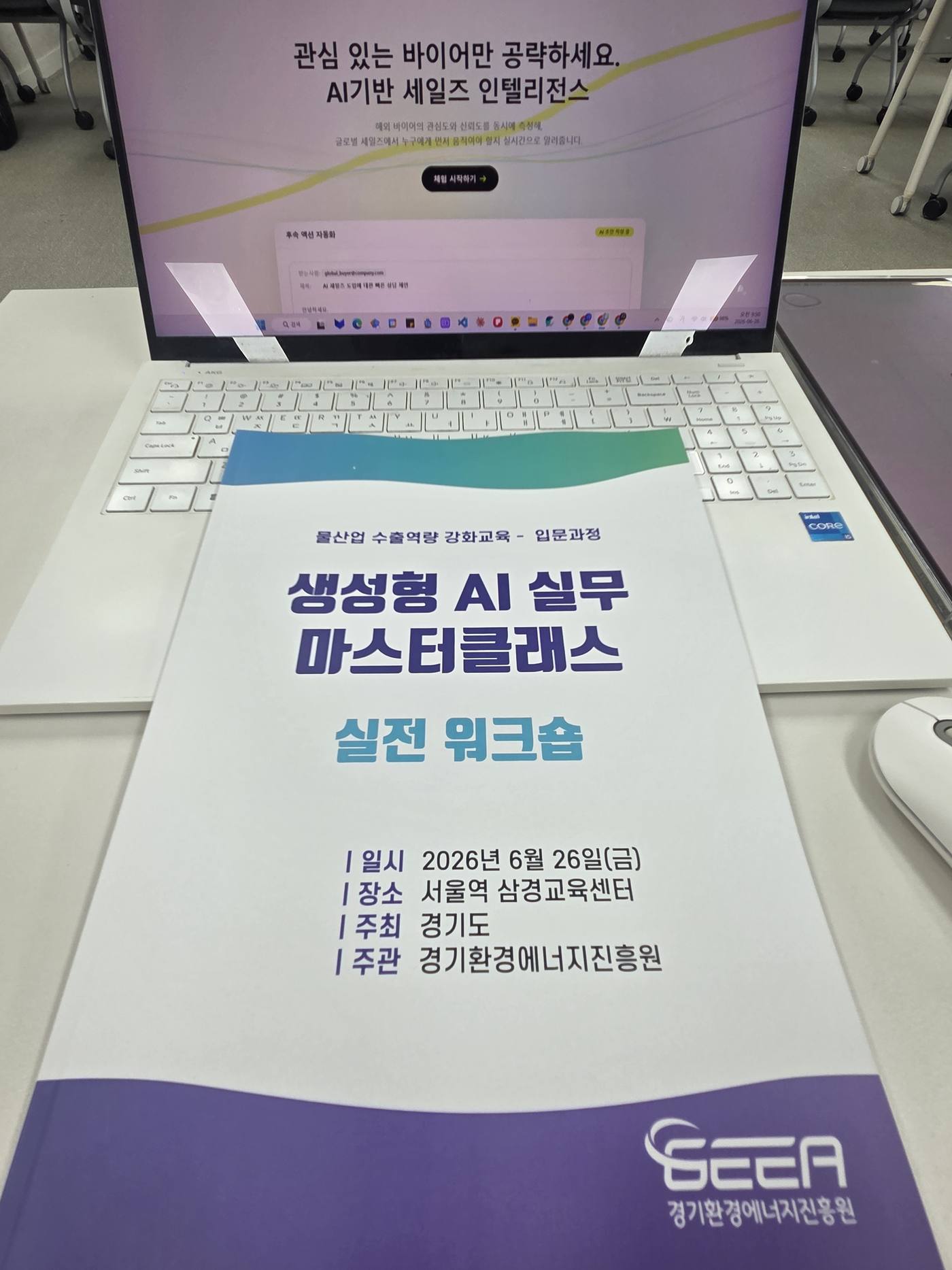
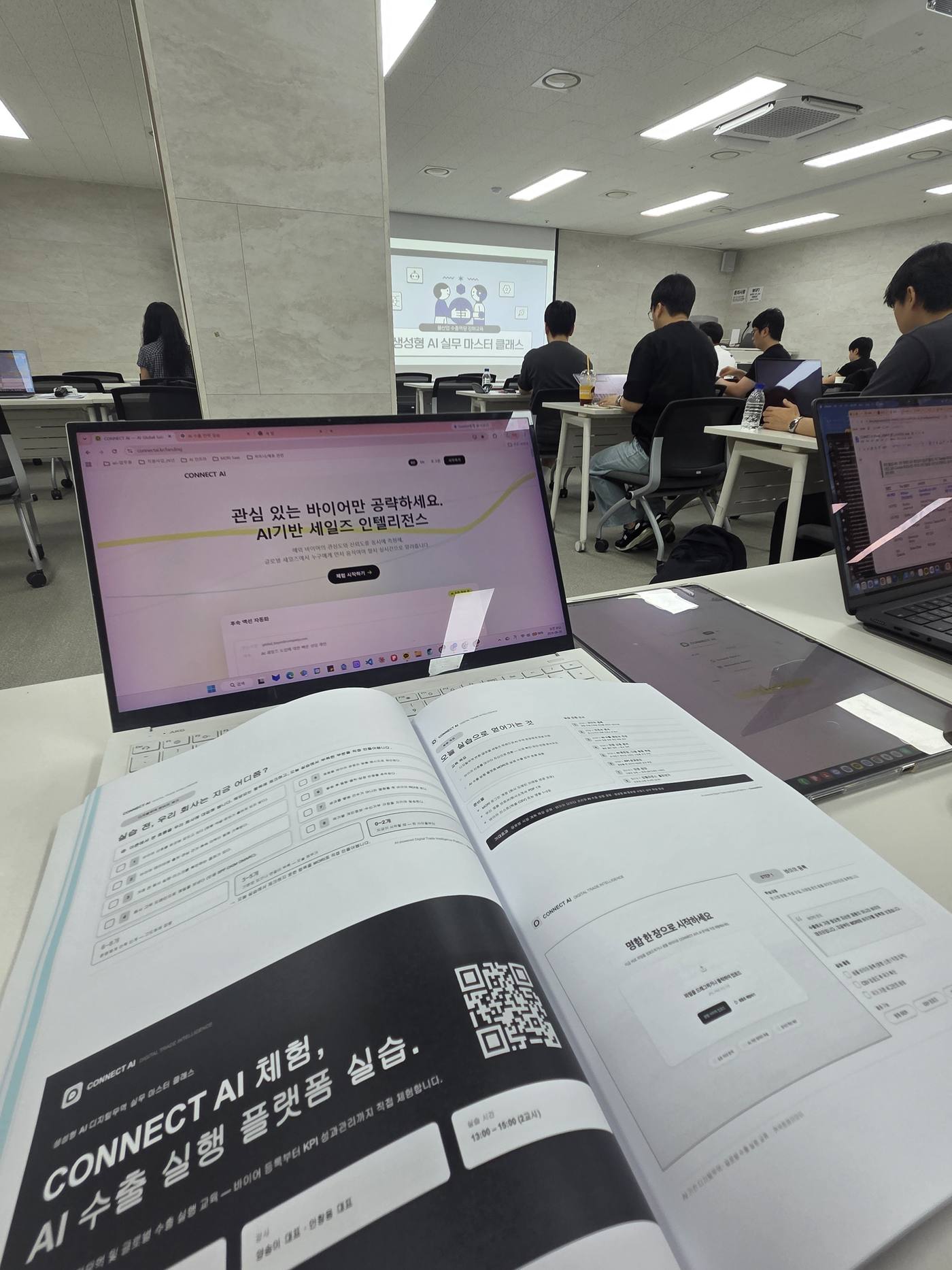
The two hours after lunch were hands-on with MORI, the AI export-execution platform. Each participant received the “CONNECT AI hands-on toolkit” workbook, and what was open on their screens was not lecture material but software that actually works.
They narrowed down target markets and buyers that fit a product, composed export proposal messages, and designed the next move based on how a buyer responds. What normally takes months to learn on the job, they passed through once in two hours.
What remains when the day ends
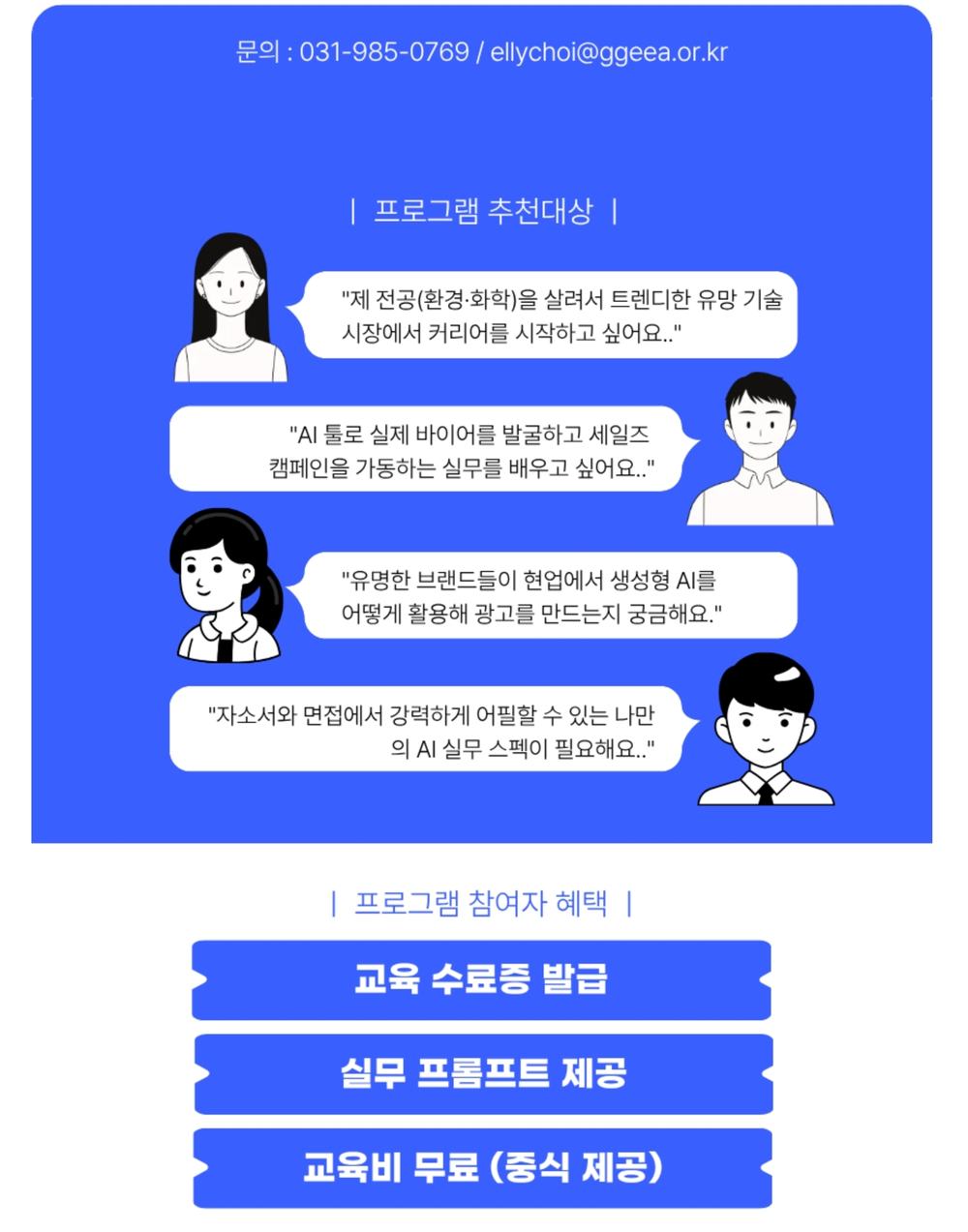
Participants received a certificate of completion and the working prompts used in the field. The course was free of charge and lunch was provided. Applications ran from June 9 to 25 through the Gyeonggi Water Industry Support Center, with priority for Gyeonggi residents and students or graduates of universities in the province.
There is one reason CONNECT AI keeps showing up in public training rooms and university classrooms. The shift to digital trade begins not with tools but with people.
Exporting is not a subject you study. It is something you do today.