
AI visibility is not about making a homepage look good. It is the work of designing a company’s digital information so that when an overseas buyer searches for a product or asks a generative AI about it, the company’s accurate information is found — and that information leads to review and an inquiry.
- Company
- LALA PINK Melanin care ampoules · LED devices · Global Academy
- Role
- Jung Han-young — AI visibility Incheon National University GTEP
- Together with
- CONNECT AI · INU GTEP · PBS KOREA
- Same team
- Kim Hyun-a — AI trade global sales Analysing buyer interest and questions
- Duration
- 12 weeks Wks 1–2 diagnosis → 9–10 information structure → 11–12 re-measure and hand over
It starts with a diagnosis, not with content
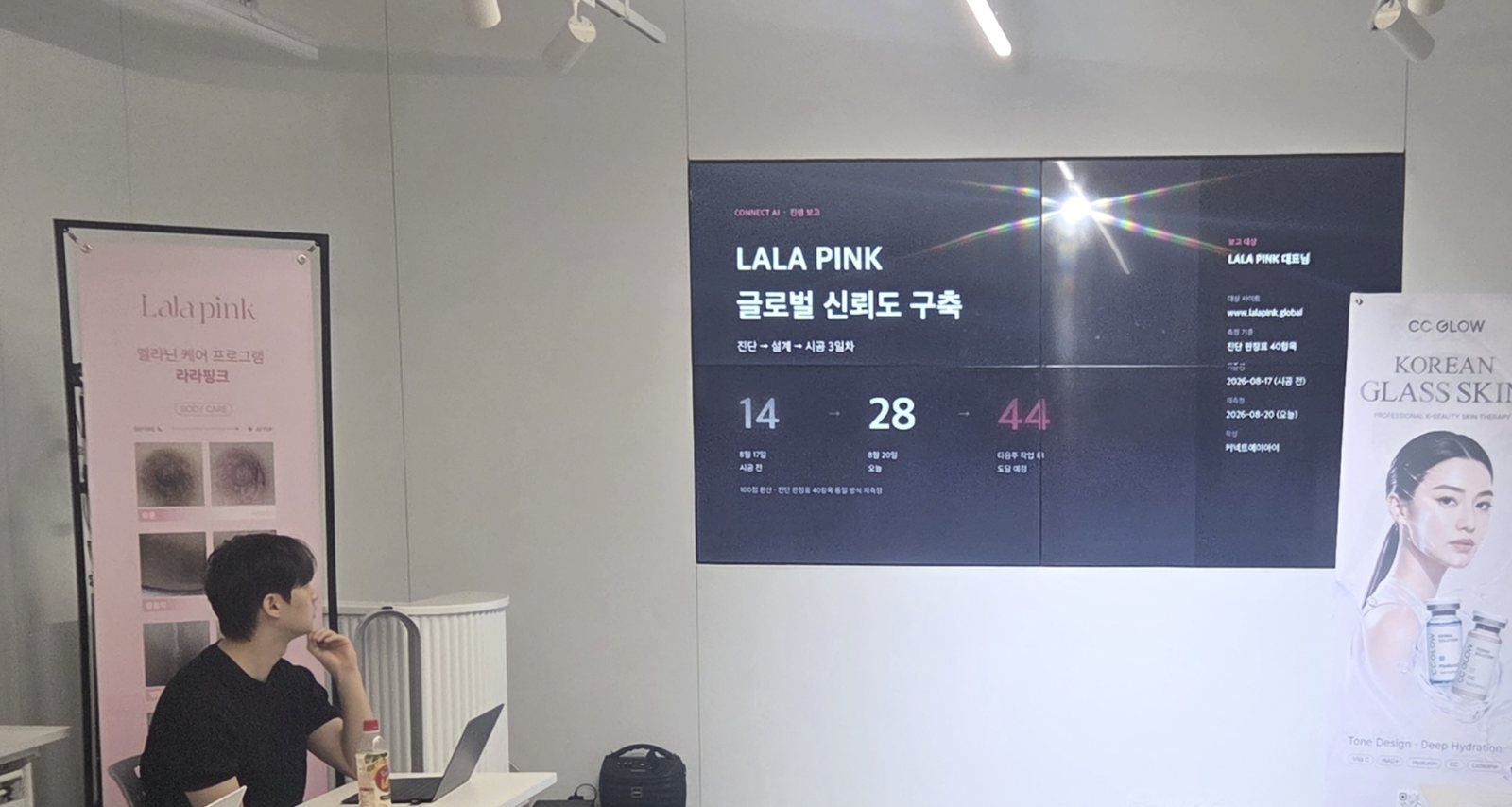
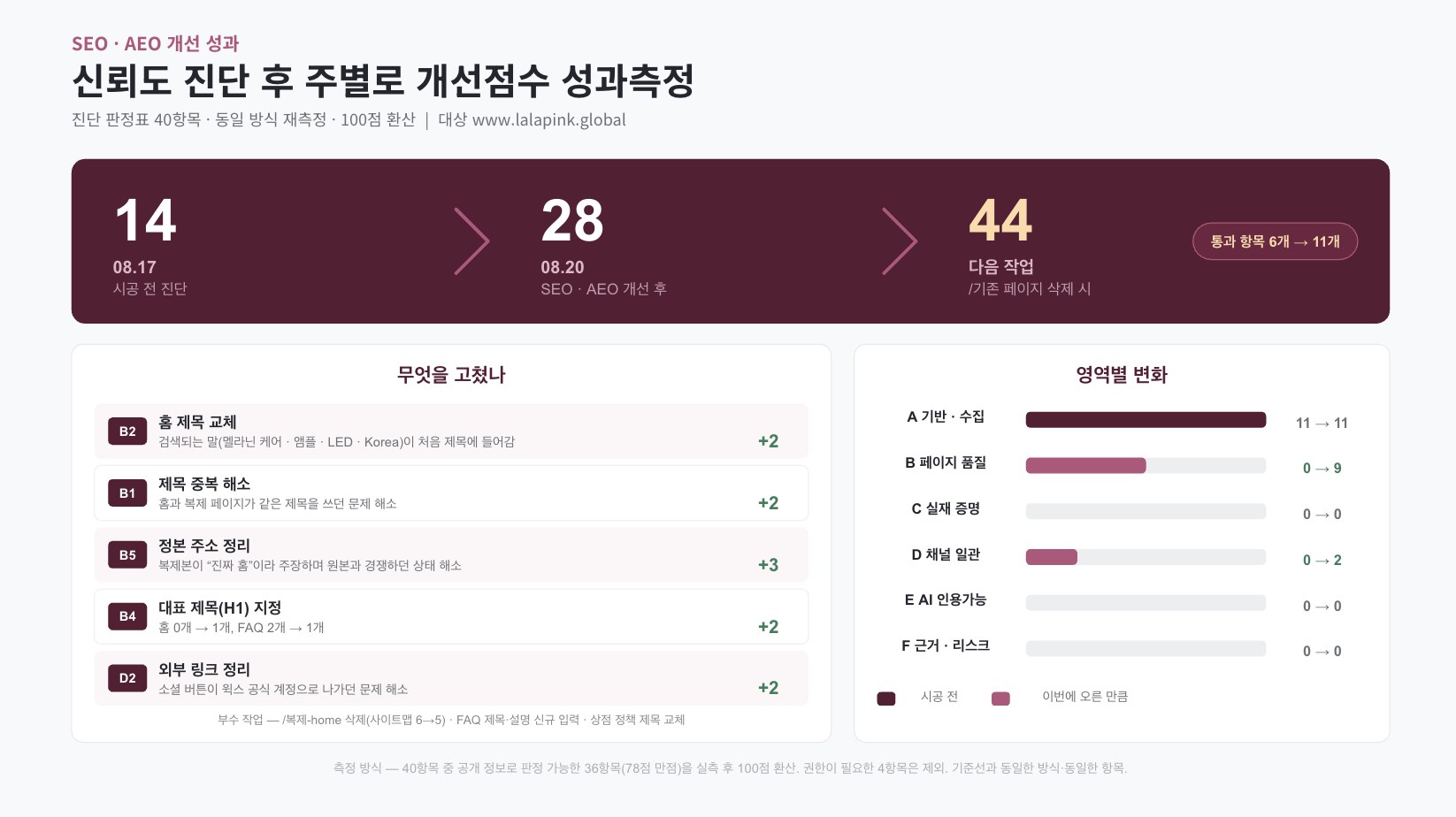
AI visibility does not begin by deciding what to make. It begins with MORI’s AI visibility diagnosis, which establishes where the company actually stands. A 40-point checklist scores only what is publicly visible, converts it to a score out of 100, and fixes in numbers what is missing — then the targets are set.
That result is not a document one person reads. LALA PINK’s CEO, staff and the marketing and sales leads look at the same screen and walk through what happens in each of the twelve weeks — including how many points each fix is worth.
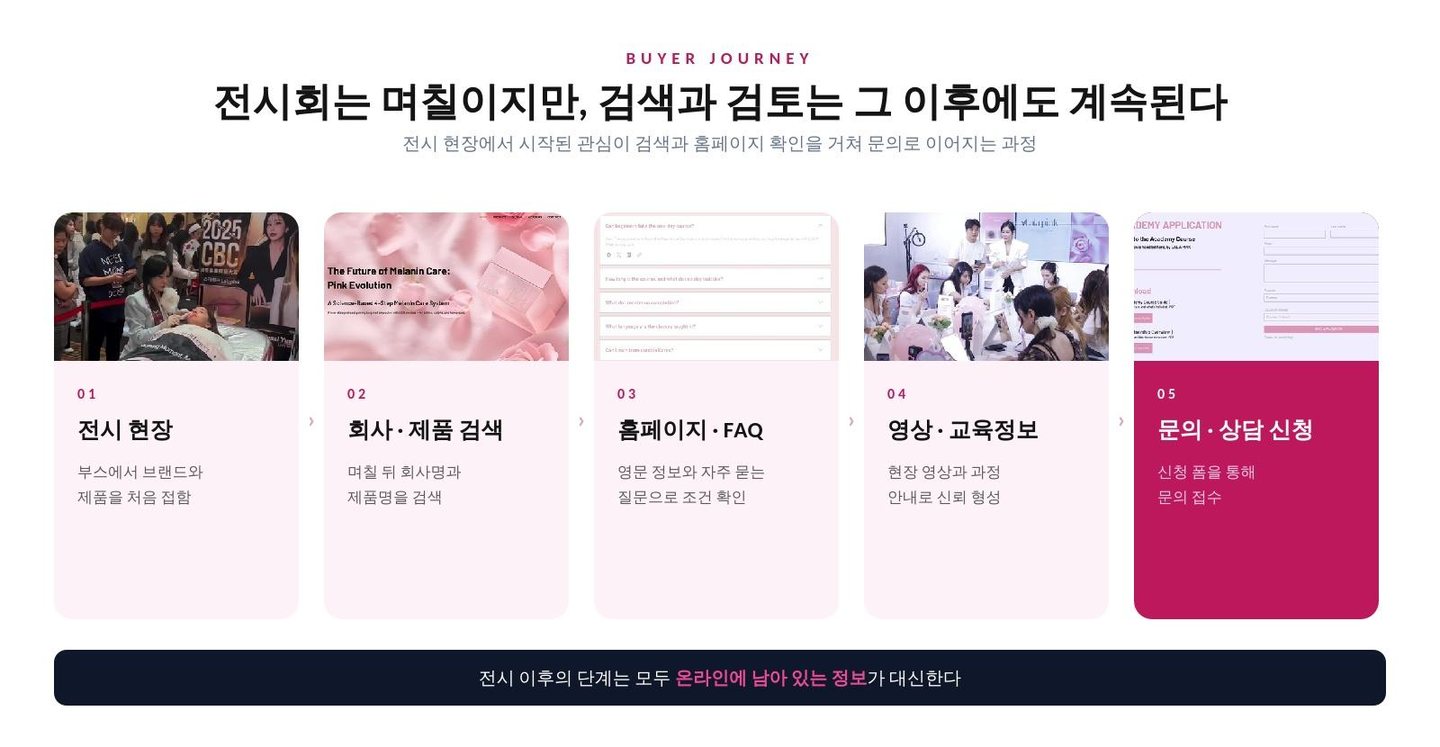
After a trade show ends, what does a buyer actually check?
Explaining the product at the booth and collecting a business card is where export sales begin. The problem is what comes next. A few days later the buyer searches the company and the product. If there is not enough English information — and not enough of what a deal review needs — the interest created on the floor simply stops there.
An English homepage, product information, company information, policies, an inquiry channel and content a buyer can trust all have to remain online for a trade show to become a working export touchpoint rather than a one-off event. My job was to build the part that remains.
What kind of work is AI visibility?
In one line: making a company findable. It is not the same as producing nice-looking promotional material. You start by diagnosing why the company is not found, what information a buyer is missing when reviewing a deal, and which information search engines and AI simply cannot read.
Once the diagnosis is done, I propose the pages and content that are needed. I write the copy from material the company has approved, apply it to the live pages, and then measure search traffic and inquiry behaviour. It is not building what someone told you to build — it runs from finding the problem all the way to the fix.
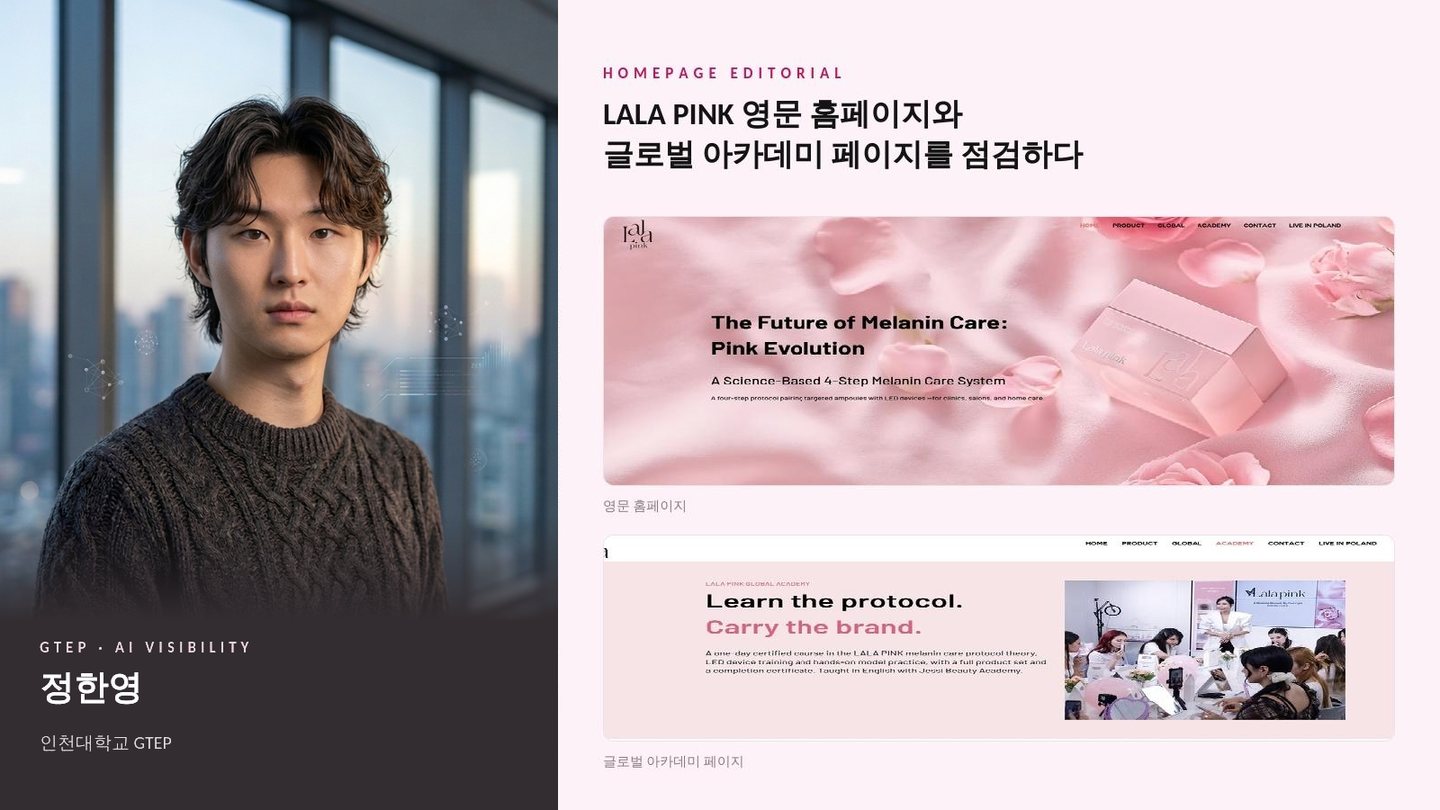
You re-read the homepage as a buyer would.
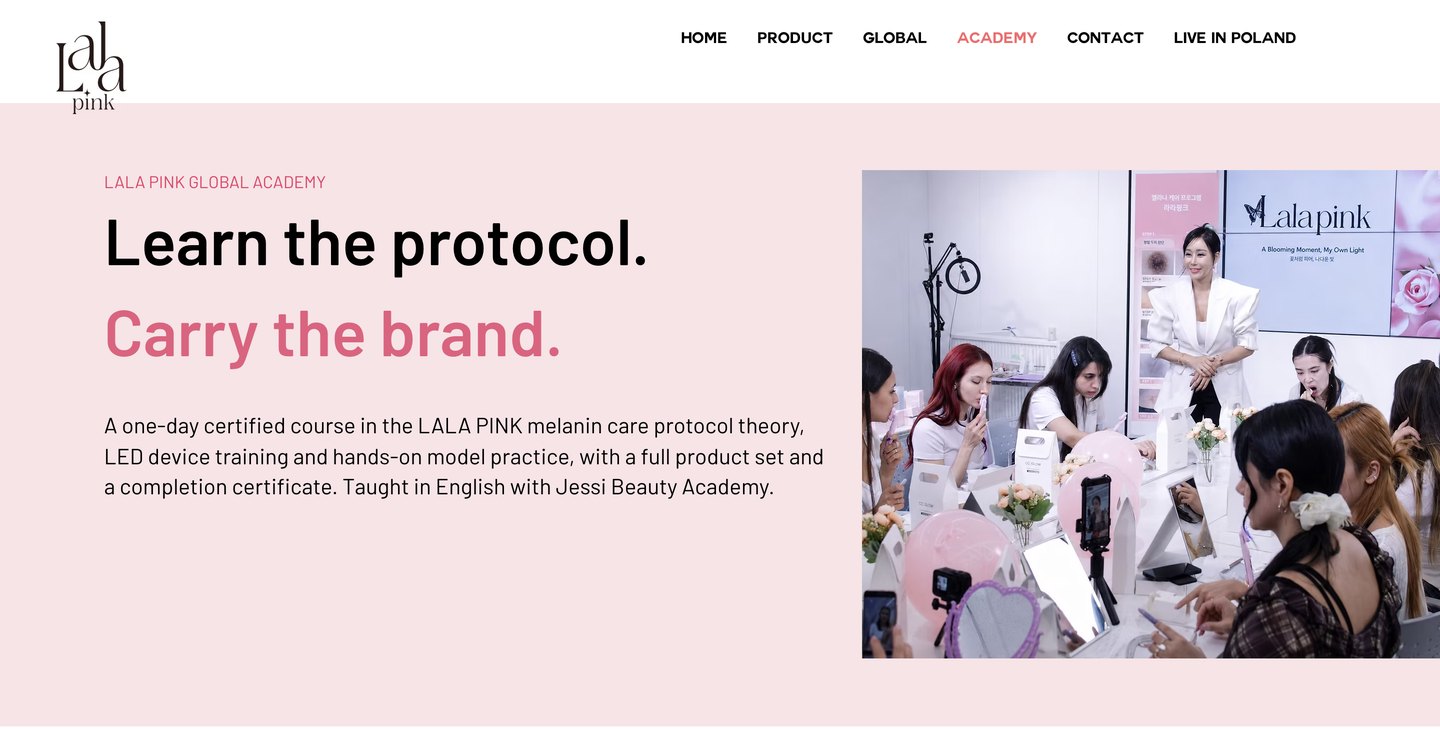
I went through all of it. Not only the product information but the company information, the policies, the inquiry channel and the training programme — checking whether someone reviewing a deal would find everything they need.
With cosmetics, a single phrase about efficacy or certification affects both regulation and trust. So I first separated claims with clear grounding from claims that still needed verification. I rewrote the English copy within the scope of the material the company had approved, and restructured the pages so a buyer interested in a product or a course could find the relevant information quickly.
What mattered more than the visible change was the path. Academy applications used to jump to a partner company’s site, so there was no way to tell what kind of inquiry had arrived. They are now taken on LALA PINK’s own site, with the purpose split into training, treatment and distribution. The company knows what an inquiry is about the moment it lands.
How is a company that gets found different from a company AI can explain?
SEO for search visibility and AEO/GEO for generative-AI answers are not separate jobs. It is one question: is the same information left in a form a machine can read? I started with page titles, descriptions and image alt text.
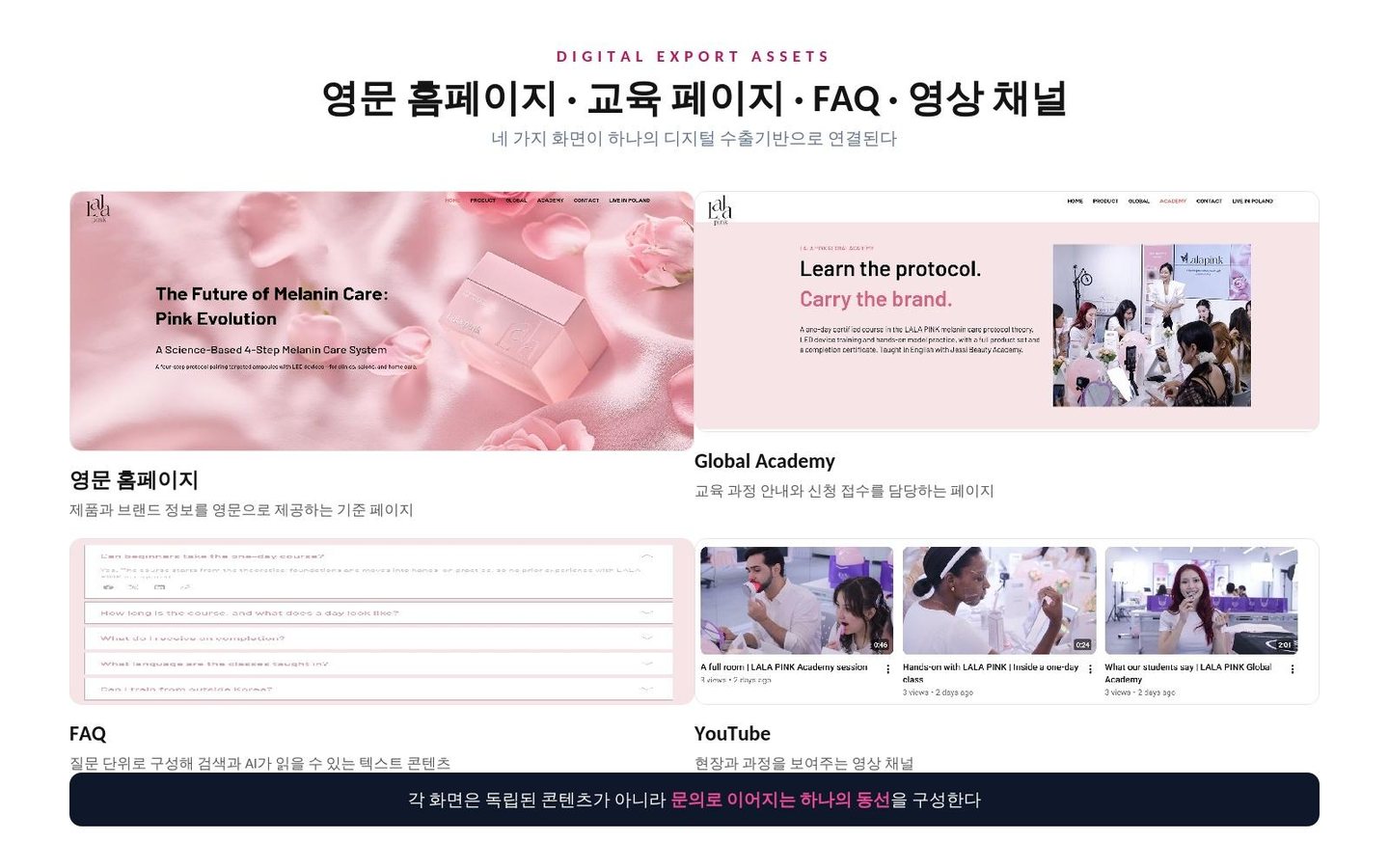
The biggest change was the FAQ. The frequently asked questions had been placed inside images. People can read those; search engines and generative AI cannot. So I rewrote all of them as text. Product, training and policy information was rewritten as clearly grounded sentences, and the related pages and videos were linked to each other.
During the project I confirmed that the official LALA PINK site appeared for certain English searches. But I do not promise how far a ranking will rise. Instead it is designed to be measured again with the same keywords under the same conditions, comparing before and after, and reading search traffic, link clicks and actual inquiry behaviour together.
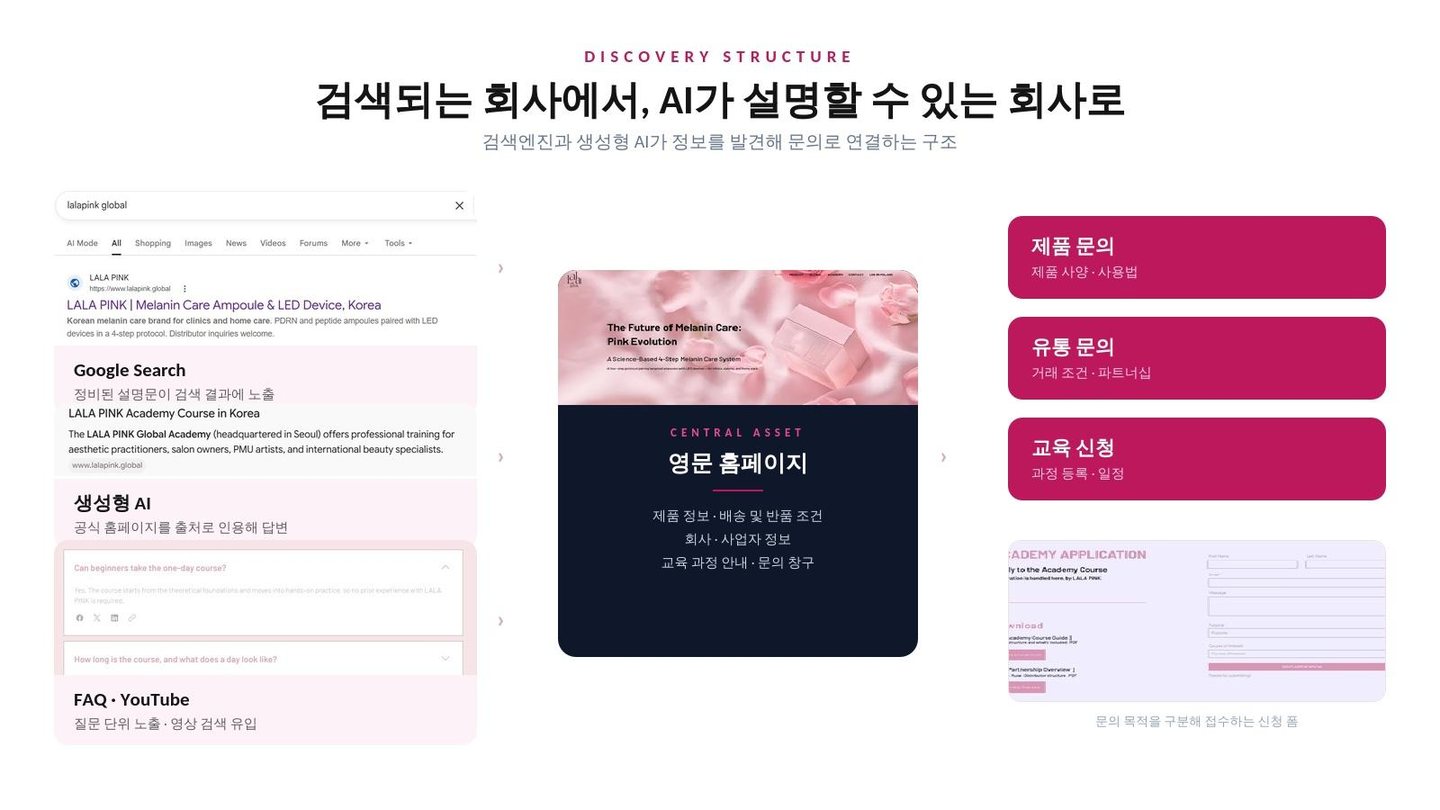
Every surface mentioned in this article is public. You can open exactly what a buyer sees.
Why did you need video — and you made it with AI?
Some things are hard to explain in writing: the atmosphere of a classroom, hands-on practice, what a trainee actually says. Buyers want to see those before they commit.
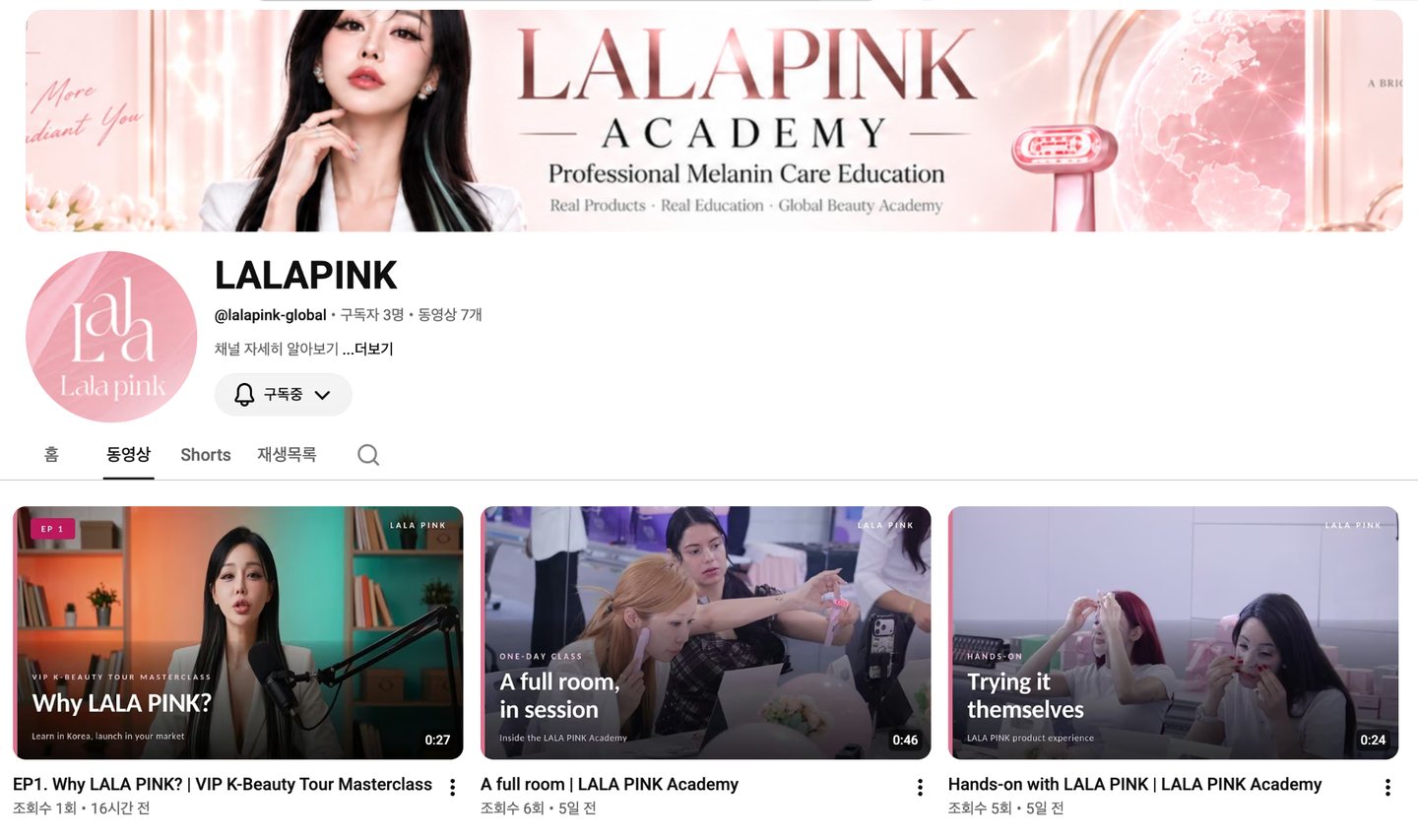
So we launched an English YouTube channel and published content on it. There are now four videos and three shorts. The opening film and two of the shorts were produced with AI — which means we could create, in English, the scenes a buyer wants to verify, without a production crew.
The channel does not stand alone. A question answered in the FAQ becomes a video topic, and the video description links back to the homepage. Content surfaces question by question, and video search becomes another way in.
The English videos, made with AI — watch here
The three AI-produced pieces on the channel. Pick a thumbnail and it plays right here, without leaving for YouTube.
The videos belong to the official LALA PINK channel (@lalapink-global). The channel holds four videos and three shorts as of September 13, 2026; the three above are the AI-produced ones.
What is left with the company after the project ends?
I thought building a structure that keeps running after the person in charge changes mattered more than producing a few pieces of content. So the handover is not only the homepage and the channels. Thumbnail templates, title-writing standards, a publishing plan and the operating method are all being documented with it.
A measurement system came with it too. Inquiry-form submissions, search keywords, link clicks from video descriptions and the actual content of inquiries are connected, so the company can see which content led to buyer interest and action.
On the same project, Kim Hyun-a — who handles global sales — analyses real buyer interest and questions, and I turn that into FAQ entries, homepage copy and video topics. The rebuilt pages then get reused in follow-up messages to buyers. Buyers’ questions become content, and the behaviour that content produces becomes evidence for sales.
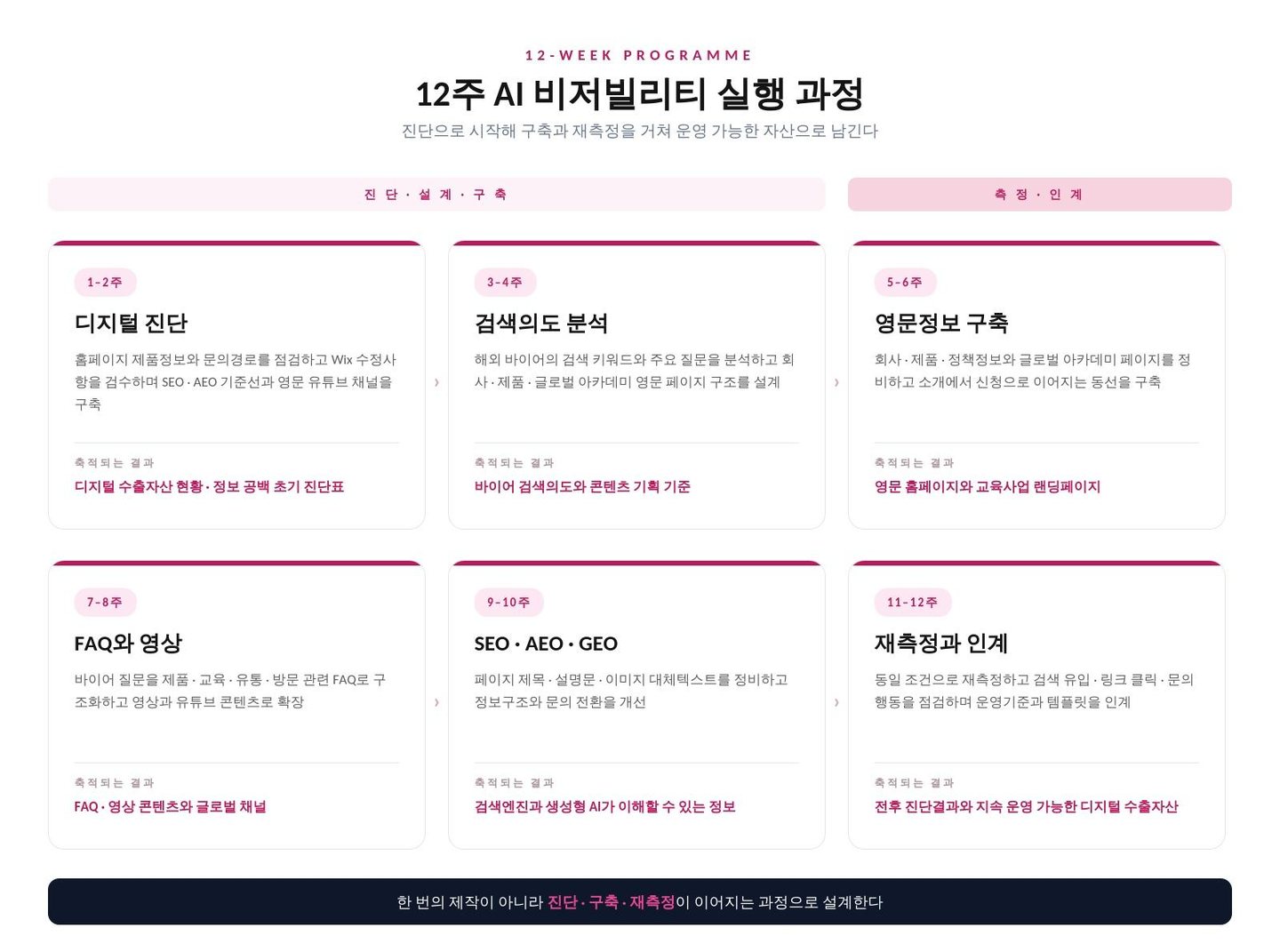
The twelve-week AI visibility programme
| Period | Main activities | What accumulates with the company |
|---|---|---|
| Wks 1–2 | Review homepage product information and inquiry paths, verify the Wix edits, and establish the SEO/AEO baseline and the English YouTube channel | An initial diagnosis of digital export assets and information gaps |
| Wks 3–4 | Analyse overseas buyers’ search keywords and main questions, and design the English page structure for company, product and Global Academy | Buyer search intent and a content planning standard |
| Wks 5–6 | Rebuild company, product and policy information and the Global Academy page, and create the path from introduction to application | The English homepage and the training-business landing page |
| Wks 7–8 | Structure buyer questions into product, training, distribution and visit FAQs, and extend them into video and YouTube content | FAQ, video content and a global channel |
| Wks 9–10 | Rework page titles, descriptions and image alt text, and improve the SEO/AEO/GEO information structure and inquiry conversion | Information that search engines and generative AI can understand |
| Wks 11–12 | Re-measure under the same conditions, review search traffic, link clicks and inquiry behaviour, and hand over the operating standards and templates | Before-and-after results and a digital export asset the company can keep running |
What does it mean for this to be your first career?
Learning one more AI tool does not connect to a company’s revenue. What I did was the whole cycle: finding the problem, building the solution from material the company approved, applying it to live pages, then measuring search and inquiry behaviour.
So this is not a content-production activity. It is professional experience in AI visibility — building one company’s digital export base. The next time I meet a company with the same problem, I already know where to look first.
Not a one-off placement. I design visibility as an asset — a structure that keeps bringing buyers in.Jung Han-young · AI visibility specialist
CONNECT AI is developing AI visibility as a new global job for young people in the regions and as a capability exporters need. For government agencies, associations and universities we offer case-based lectures, a diagnosis and build demo, and a tailored twelve-week pilot design.
Request a demo or lectureParticipants complete the AI visibility training, then diagnose and improve local exporters’ English homepages, FAQs, e-brochures, global content and discovery structure.
What is the AI visibility role?
It is the work of designing a company’s digital information so that when an overseas buyer searches for a product or business opportunity — or asks a generative AI — the company’s accurate information is found and leads to review and an inquiry. It is not homepage production: MORI’s AI visibility diagnosis fixes the starting point, the build follows, and the same method measures it again.
What actually changed in this project?
The English homepage and the Global Academy page were rebuilt from a buyer’s point of view, and an FAQ that had been trapped inside images was rewritten as five text questions that search engines and generative AI can read. Course applications that used to jump to a partner site are now taken on LALA PINK’s own site with the purpose split into training, treatment and distribution, and a new English YouTube channel now carries four videos and three shorts (as of September 13, 2026).
Do you guarantee higher search rankings?
No. Rather than promising a particular ranking gain in advance, the project is designed to be re-measured with the same keywords under the same conditions so the before-and-after change can be verified — reading search traffic, link clicks and real inquiry behaviour together.
How were the videos produced?
Not everything on the channel is AI-produced. The opening film (EP1) and two of the shorts were — those three are exactly the ones that play inside this article. Without a production crew, it was possible to create the scenes buyers want to verify before a deal, in English.
Can an agency or a university run the same project?
Yes. CONNECT AI supports government agencies, associations and universities with case lectures on LALA PINK and INU GTEP, an AI visibility diagnosis and build demo, and a tailored twelve-week pilot design.
The structure that makes a company findable becomes one person’s profession.